The Uganda Special Entry Permit is a non-standard immigration authorization issued by the Directorate of Citizenship and Immigration Control (DCIC) under the Uganda Citizens and Immigration Control Act of 1999. Unlike a standard Uganda eVisa for tourism, this permit covers paid or voluntary professional activities for NGO workers, researchers, and government contractors under distinct classifications: Class G1, Class G2, Class A2, or the Intern/Research Pass.
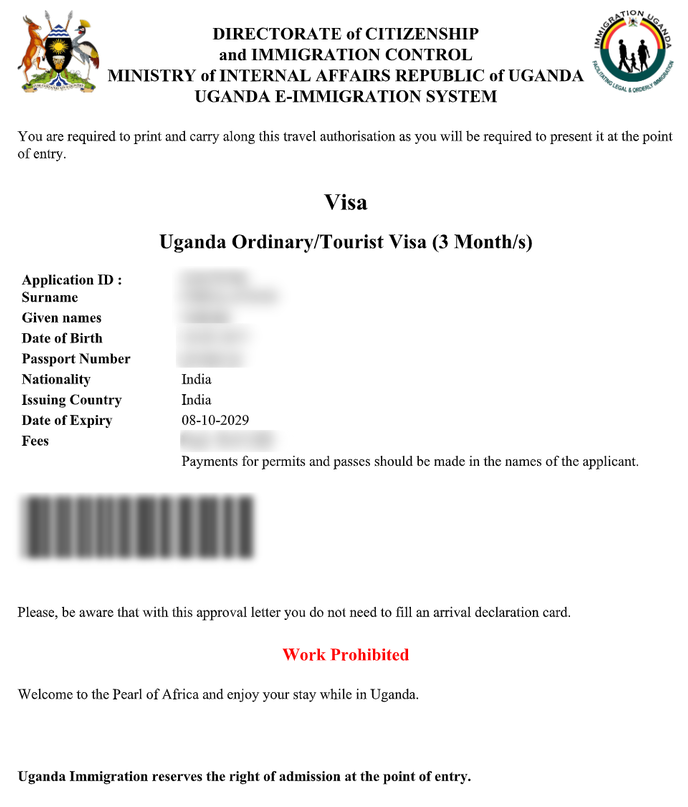
To obtain approval, foreign nationals, including US passport holders, must be sponsored by a legally registered host entity in Uganda. Securing a Uganda Special Entry Permit requires registered host sponsorship, class-specific documentation, organizational verification, and online processing before entry into the country.
What Is the Uganda Special Entry Permit and Who Qualifies?
The Uganda Special Entry Permit grants legal authorization for foreign NGO staff, researchers, and contractors to conduct non-tourist professional activities under DCIC oversight.
Governed by the Directorate of Citizenship and Immigration Control (DCIC) under the Citizenship and Immigration Control Act (1999), the Uganda Special Entry Permit provides legal authorization for foreign nationals to perform professional work. Standard tourist eVisas strictly prohibit gainful or voluntary employment. In contrast, the Uganda Special Entry Permit grants specific operational rights based on official host sponsorship, requiring passport validity of at least 6 months and a valid Yellow Fever vaccination certificate.
| Permit Class | Eligible Applicants | Duration & Key Terms |
|---|---|---|
| Class G1 | Unpaid NGO volunteers and missionaries | Tied to NGO project duration |
| Class G2 | Salaried NGO staff and foreign expatriates | 6 months to 3 years (USD 800 fee benchmark from 2018) |
| Intern / Research Pass | Academic researchers affiliated with Ugandan institutions | Tied to research proposal approval (verify with DCIC) |
| Class A2 | Contractors employed and paid by Ugandan state bodies | Tied to official government contract (Class A baseline: USD 1,550/year) |
| Special Pass | Short-term technical personnel and transitional workers | 90 days initial, plus 60-day extension (USD 400 fee) |
Host Sponsor Obligations and Labor Market Requirements
Host organizations sponsoring a Uganda Special Entry Permit must hold an active organizational code, valid tax clearance, and fulfill a 30-day print advertising requirement.
Every foreign national applying for a Uganda Special Entry Permit must be sponsored by a legally recognized local entity. Sponsoring organizations in Uganda must maintain an active organizational code on the DCIC portal, hold valid business registration, and present an updated tax clearance certificate. Additionally, non-governmental host organizations must verify active registration with the Uganda NGO Bureau before sponsoring foreign personnel.
To comply with statutory labor market testing, the Uganda Special Entry Permit obligates employers to prove local recruitment efforts prior to filing. Host organizations must publish the vacant position for at least 30 days in a daily print newspaper with nationwide circulation. Online job postings are strictly unaccepted by DCIC authorities for meeting this sponsorship threshold.
Step-by-Step Application Guide via the e-Permit Portal
Applying for a Uganda Special Entry Permit involves host sponsor initiation, online document submission, fee payment, and security review by DCIC.
The DCIC e-Permit portal (visas.immigration.go.ug) processes applications electronically. Obtaining a Uganda Special Entry Permit requires foreign applicants and host organizations to complete four sequential steps:
- Sponsor Initiation: The host organization initiates the electronic application using its mandatory organizational code.
- Data Entry and File Upload: The applicant completes personal details and uploads category-specific supporting documents in PDF or JPEG format.
- Fee Payment: Online payment of non-refundable government processing fees (such as USD 400 for a 3-month Special Pass per 2026 fee schedules).
- DCIC Review and Approval: Electronic submission for security vetting, taking approximately 10 working days for a Special Pass or 1 month for Class G2 permits before issuing an electronic endorsement.
Applicants tracking a Uganda Special Entry Permit submission should maintain their application reference number to monitor electronic status updates.
Required Documents, Fees, and Processing Timelines
Applicants need a valid passport, yellow fever vaccination, passport photos, and category-specific credentials, with processing times ranging from 10 days to 1 month.
Securing a Uganda Special Entry Permit requires standard identification alongside category-specific documentation. All applicants must submit a passport valid for at least 6 months from entry, a valid Yellow Fever vaccination certificate, police clearance for long-term permits, and a recent passport photo.
Category requirements for a Uganda Special Entry Permit include NGO Bureau registration letters for NGO staff, institutional research proposals for researchers, and official agency endorsements for government contractors. Government fees and processing timelines are outlined below:
| Permit Category | Government Fee Benchmark | Processing Time |
|---|---|---|
| Special Pass (Short-term) | USD 400 (3 months) / USD 300 (extension) | ~10 business days |
| Class G2 (Salaried NGO/Expatriate) | USD 800 (historical 2018 benchmark; confirm on portal) | ~1 month |
| Class A2 (Government Contractor) | USD 1,550 (annual baseline per DCIC) | ~1 month |
Note: This website is an independent informational portal and is not affiliated with DCIC or the government of Uganda. All fees remain subject to change. Last verified: August 2026.
Uganda Special Entry Permit FAQ
What is the difference between a Uganda special entry permit and a standard eVisa?
A standard eVisa strictly prohibits employment, while a Uganda special entry permit provides legal authorization for paid or voluntary professional work like NGO service, research, or government contracting under the 1999 Immigration Act.
Can US citizens apply for a Uganda special entry permit online?
Yes. US citizens can apply online via the DCIC e-Permit portal with a valid US passport (6 months validity), Yellow Fever certificate, passport photo, host organization details, and category documents.
What is the difference between Class G1 and Class G2 permits for NGO staff?
Class G1 permits cover unpaid volunteers and missionaries, whereas Class G2 permits apply to salaried expatriate NGO employees for durations between 6 months and 3 years.
What host sponsor documents are required for a research pass in Uganda?
Sponsoring a research pass requires host institution registration, an approved research proposal, an official institutional cover letter, and supervisor details from an accredited Ugandan university or research organization.
How much does a Uganda special entry permit cost in 2026?
A 3-month Special Pass costs USD 400 (plus USD 300 for extension), Class A permits cost USD 1,550 annually, and Class G2 permits were benchmarked at USD 800 in 2018. Confirm current rates on the e-Permit portal.
How long does it take to process a Uganda special entry permit?
Short-term Special Pass applications take approximately 10 working days, while long-term authorizations like Class G2 permits generally require around 1 month for DCIC review.
Can I convert a Special Pass to a Class G2 work permit while inside Uganda?
Yes. Travelers often use a short-term Special Pass to commence duties legally while their host sponsor submits and awaits approval for a long-term Class G2 permit.
What are the penalties for overstaying or working without a valid permit in Uganda?
Unauthorized employment or overstaying violates the Citizenship and Immigration Control Act of 1999, incurring daily fines, mandatory detention, deportation at personal expense, and potential re-entry bans. Review Uganda overstay penalties for full details on fines and resolution steps.